Bone Broth
A simple and nourishing recipe for any season.
Season Year-round
Ingredients
- 2 lbs of stock bones
- The cloves of half to one head of garlic, to taste
- 2 tablespoons unfiltered cider vinegar
- Water to cover
Method
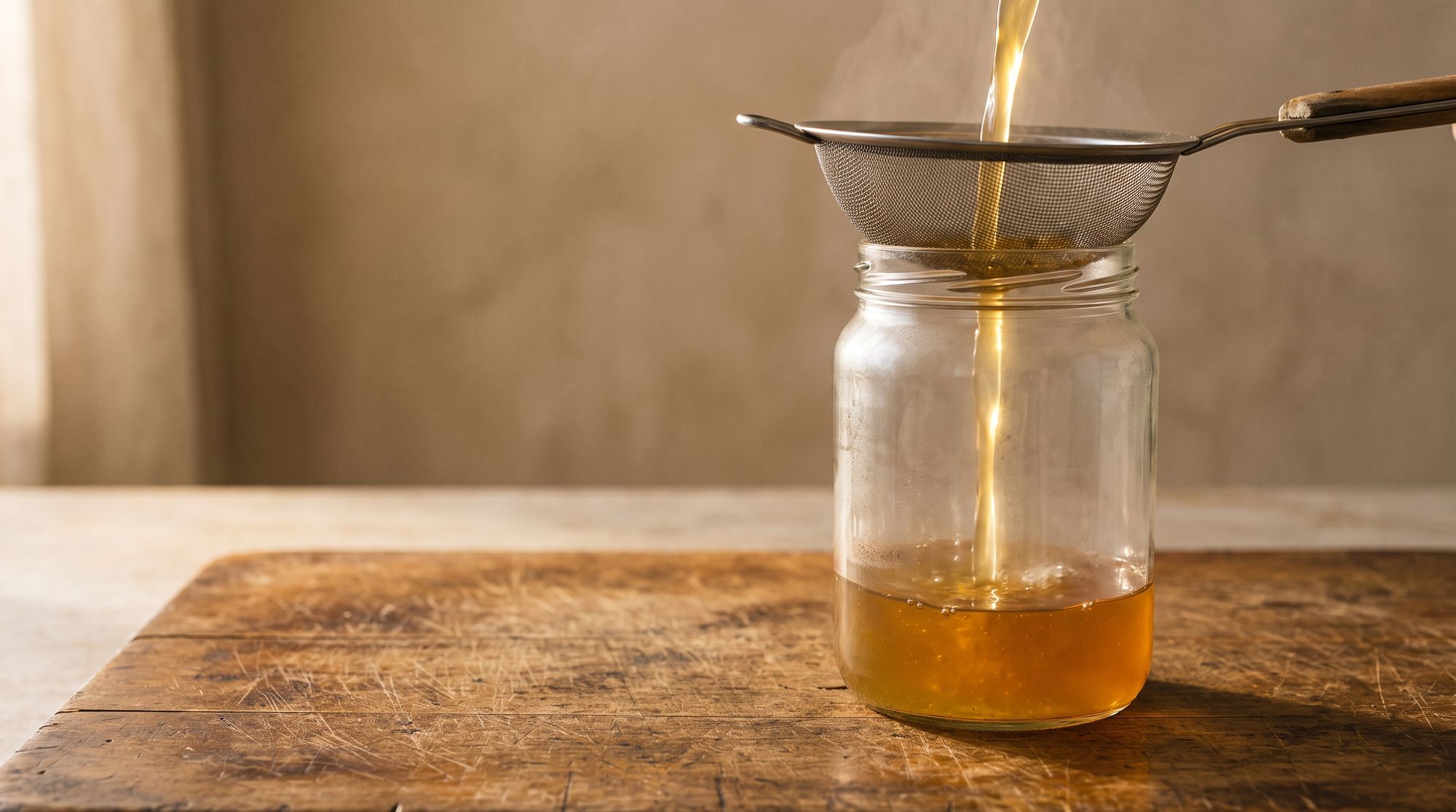
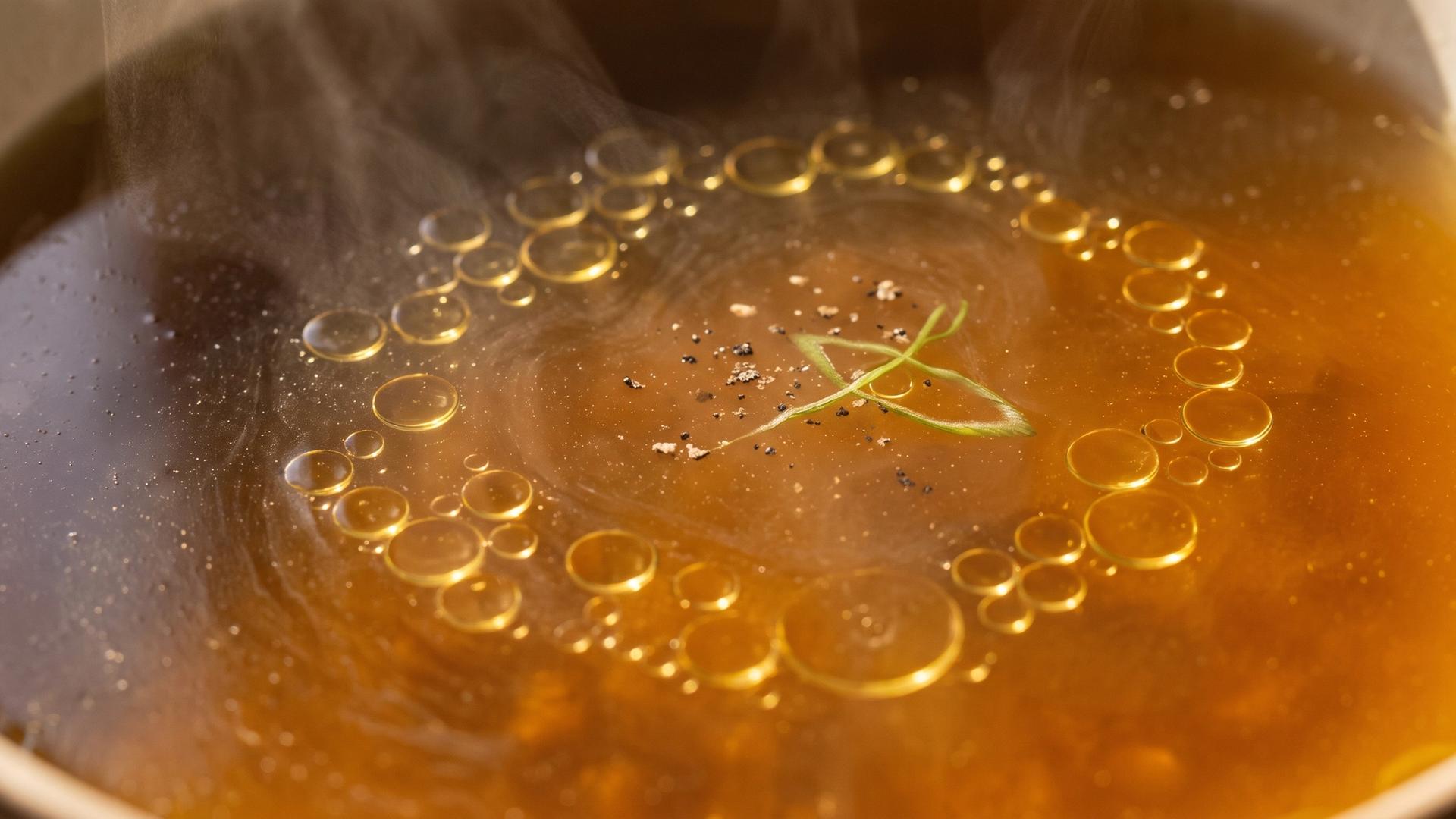
You can use the bones as they are, or roast them first under the broiler until brown but not burnt; deglaze the hot pan with a little water and add that to the pot. Put the bones, garlic and vinegar in a heavy stockpot — anything but aluminium — and cover with water. Bring to a boil, drop to a simmer, and leave it for eight to twenty-four hours. Skim the foam off from time to time but keep the fat that rises. Strain through a colander and then a sieve. Store in glass in the fridge.
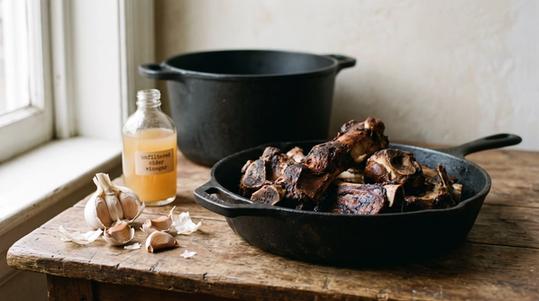
The key to good broth is good bones — spine and knuckle from organic, pasture-raised animals, or chicken backs and necks. Bones from conventionally raised animals are a reliable way to take in whatever the animal was given. A greenmarket or a good butcher will sort you out.
I use it as both a preventive and a restorative, and I drink it as a tea, with garlic, ginger and a dash of cayenne, at the first hint of a sore throat. It’s full of gelatin and the amino acids that come with it, and is a warm, deeply savory food that is easy to digest, and a good base for everything else you cook. Bone broth also earns its place in Chinese dietary practice as a slow, nourishing, winter food — the sort of long-cooked, warming dish the season calls for.