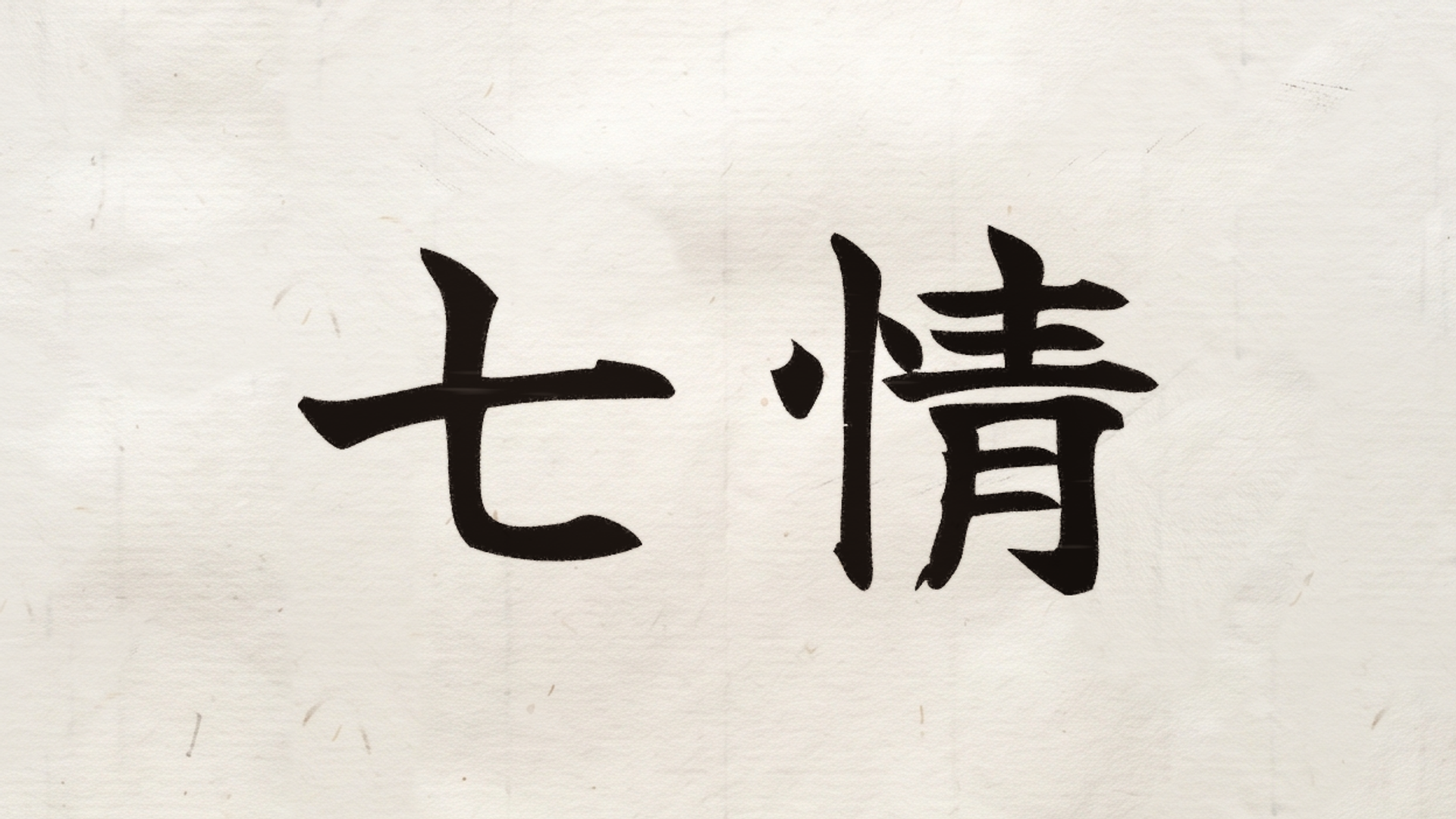
Emotional release treatment
Acupuncture for emotion held in the body
What is an emotional release treatment?
Bessel van der Kolk’s The Body Keeps the Score has made widely familiar an idea that Chinese medicine has worked with for centuries: that emotional experience and the physical body are deeply intertwined. There is an excellent interview with him on Ezra Klein’s podcast that we recommend to patients regularly. He doesn’t mention acupuncture specifically, but there is a long tradition in classical acupuncture for working with the physical patterns that can accompany emotional experience.
You may have thought something through, talked it through, worked on it in therapy, understood exactly where it came from — and still find your chest tight, your shoulders raised, your jaw set, or your sleep disturbed. Understanding and release are not the same event, and the second does not automatically follow the first.
Chinese medicine has long understood emotional experience as inseparable from the physical body. Emotion can be expressed through changes in breathing, muscular tension, sleep, digestion, pain, and other physical patterns, just as the state of the body can influence how we experience emotion. Acupuncture gives us a way of working with that relationship from the physical side.
These treatments draw on the Luo Vessel (絡) system, a classical part of acupuncture concerned with the ways physical and emotional experiences are held and expressed through the channels. We use the Luo Vessels differently depending on whether we are working with a more immediate emotional state, something consciously suppressed or unfinished, or older material that seems to sit much deeper.
It pairs particularly well with therapy
This is not a substitute for psychological work, and we are not mental health providers. Rather, acupuncture offers a way of working with the physical side of something that may also be addressed psychologically.
We treat a number of patients who are in EMDR therapy and come to us for the body side of the equation, and the combination can work very well. The same is true of talk therapy of many kinds. If you are working with a therapist, tell us — we are glad to be part of a coordinated approach. If you are not and you would like to be, we can help you find someone.
Three levels
Within this classical framework, we understand emotional patterns as being held at different depths, with a different treatment approach for each.
The surface level
This works at the wei (衛) level — the defensive qi, the outermost layer of the body’s response to the world. This is the more immediate emotional level: how you are feeling today, this week, or in response to what is happening in your life now.
We almost always begin here, and the reason is worth understanding. A surface treatment does not only address what you are feeling today; within this approach, it also begins to establish a pattern of allowing emotional responses to move rather than continually holding against them.
Depending on your life and what you were shown as a child, allowing an emotion to arise, move through, and resolve may not come easily. Holding can show up physically as muscle guarding, tension, pain, discomfort, heaviness, disturbed breathing, or other symptoms that may appear purely physical from the outside.
Patients often tell us some version of the same thing: they have talked something through extensively with a therapist, understand it intellectually, and yet their body seems to continue responding as though it has not quite moved on.
The first treatments therefore begin at the most accessible level, particularly with emotions that have already been substantially processed mentally.
The mid level
This reaches suppressed emotion at the ying (營), or nutritive/blood, level.
These are feelings you know are there. You were angry, hurt, frightened, or grieving, and there was no time or space to deal with it — you had a day to get through, people depending on you, or simply more than you could manage at the time.
The feeling is not necessarily hidden from you. It simply never felt finished, and some part of the physical response may still recur.
The deep level
This works at the yuan (元) level, the deepest constitutional level within this classical framework, and is used for emotional material that is less consciously accessible.
Sometimes this becomes apparent only when something triggers a response that feels unexpectedly strong: someone says something and you find yourself far more upset than the immediate situation seems to explain. You may have no idea where the feeling came from, or you may have an inkling but find that you can access the emotion only when something activates it.
At other times, an old experience seems completely resolved until you begin talking about it and suddenly discover how much emotional or physical activation is still present.
The five emotions
Chinese medicine does not sort emotions into good and bad. We are emotional beings, and feeling a wide range of things is a sign of health rather than a problem to be corrected.
An emotion becomes problematic when we become persistently stuck in it — when it cannot resolve and instead keeps recurring, interfering, or coloring our experience long after the circumstances that produced it have changed.
Five broad emotional patterns form the foundation of this approach, each associated with a channel:
- Liver — anger, irritability, frustration
- Lung — grief, sadness, a sense of loss
- Kidney — fear
- Spleen — worry, overthinking, obsessing, rumination
- Heart — anxiety
A color wheel
Not everything a person feels fits neatly into one of those five categories. Guilt is not on the list. Neither is shame, resentment, homesickness, or any number of the complicated emotional states people actually arrive with.
We think of the five as something like primary colors. Complex emotions may contain several elements at once. Shame, for example, might contain fear and anger as well as worry or anxiety.
In treatment, that may mean working with two or three channels together rather than trying to force a complicated emotional experience into a single category. Practitioner and patient work together to determine where the focus should be.
It is a way of working that fits how people actually feel, which is rarely one clean emotion at a time.
What treatment involves
The treatment follows a particular sequence. We first determine the level we are working at — wei, ying, or yuan — and the channel or channels that correspond to the emotions being treated. We then select the appropriate Luo Vessel points along with other acupuncture points that support the treatment.
The needles are generally retained for 20–30 minutes. During that time we pay attention not only to how you feel emotionally, but also to what happens physically. Sometimes an area where the body habitually holds tension becomes unexpectedly apparent: the jaw tightens, the diaphragm braces, the shoulders activate, or another familiar pattern emerges. When that happens, we can address the area directly with additional acupuncture.
After the retained needles are removed, we use a Plum Blossom needle — a small traditional instrument that provides gentle, rhythmic stimulation at the surface of the skin — over the Luo point we have treated. Within this approach, the Plum Blossom has a particular role: to bring what has been engaged through the acupuncture toward the surface for release.
We then complete the treatment farther along the channel, using acupuncture or moxibustion to settle and integrate the work.
Surface and mid-level treatments are completed in a single session.
A deep emotional-release treatment takes two sessions to complete, usually within a one-to-two-week time frame. At that depth we find it works best initially to work with one emotion and channel at a time. After several treatments, we may work with two or three together when appropriate.
Every level can be repeated as needed. Patterns that have been present for years do not necessarily change in a single visit, and several treatments are common. Your practitioner will talk you through what they think is called for and at what pace.
What might I experience?
What happens on the table varies considerably from person to person. Expect real rest, often surprisingly deep. Some people feel warmth, a wave moving through the body, tears arriving without a particular story attached, or a part of the body — often the jaw, shoulders, abdomen, or diaphragm — becoming noticeably tense or active.
Where a physical pattern keeps recurring in subsequent treatments, we can add acupuncture points there or schedule additional time for hands-on myofascial work to address that specific area.
Nothing particular may register during treatment, and then over the following days something feels different. An old memory may surface; an emotion may arise without a particular memory attached; or there may be a new realization about a familiar pattern of interaction with a friend, child, parent, partner, or co-worker.
Sometimes the change is much quieter: patients simply feel lighter or more relaxed. We often see this when the emotional experience has already been substantially processed and what remains is a familiar physical pattern of holding.
We generally advise leaving some room for quiet in the days after treatment. Responses often emerge not in the middle of a hectic workday, but when there is finally some space — over a cup of tea, on a quiet drive, or during a walk — to notice what has shifted.