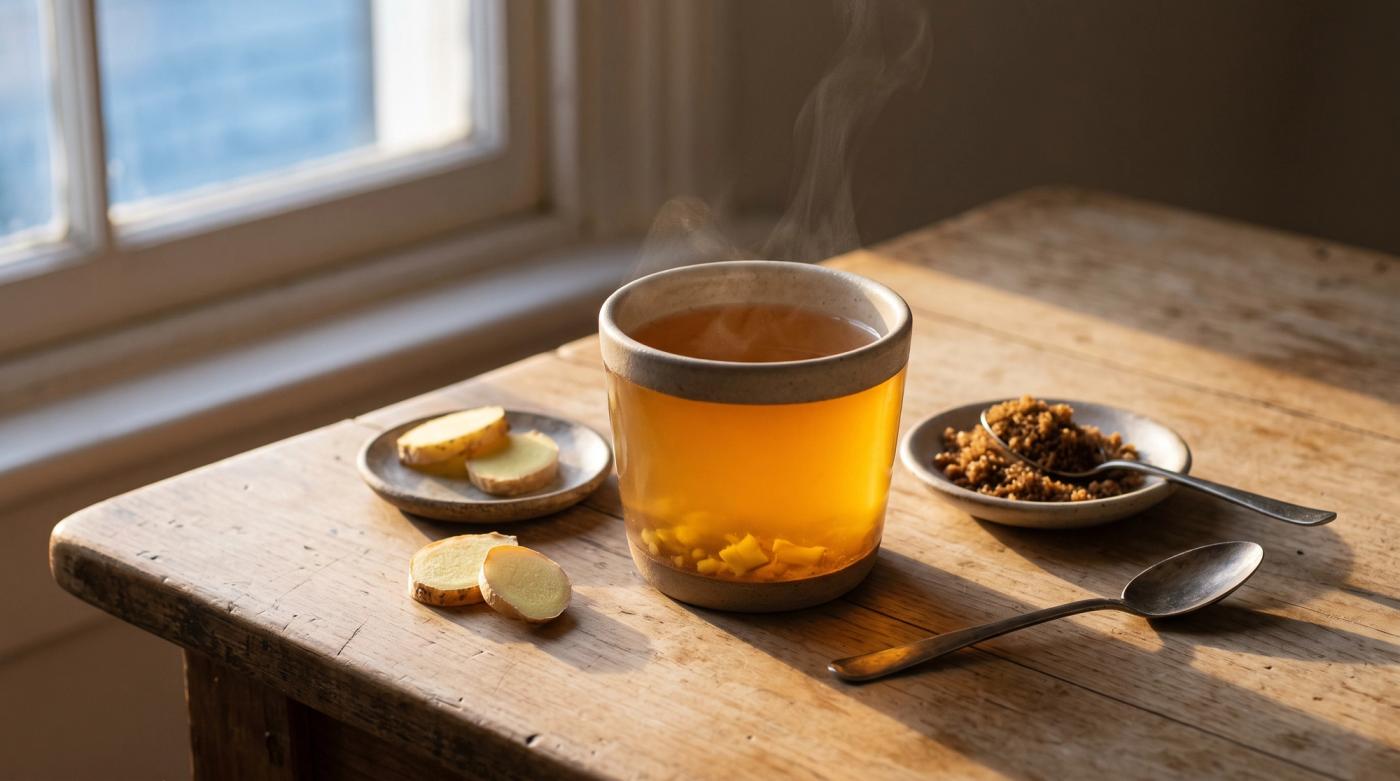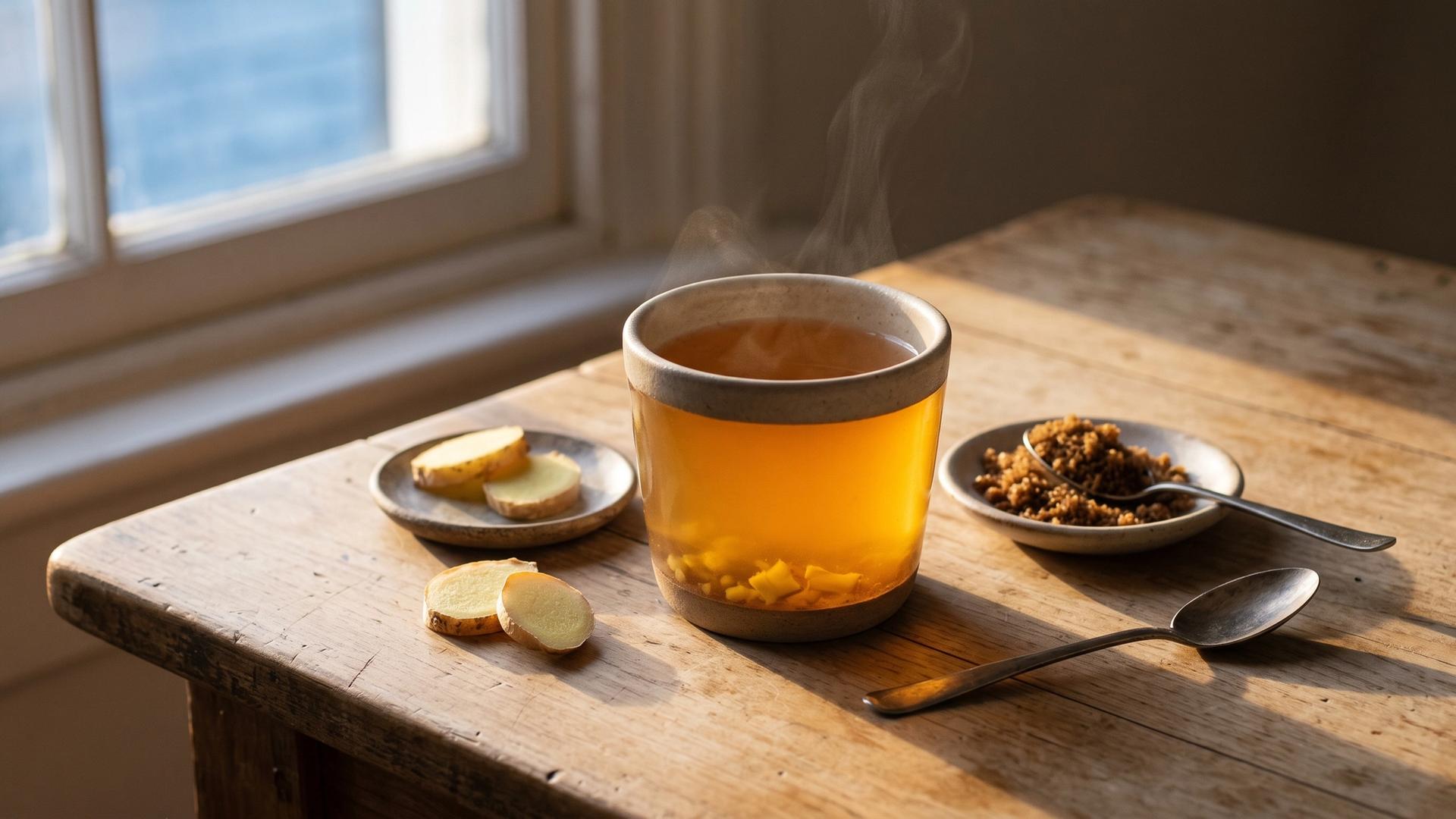
Ginger Tea for Menstrual Cramps
A two-ingredient tea for period pain that eases with warmth — why it works and when in the cycle to drink it.
Season Year-round
Ingredients
- 3 slices of fresh ginger, minced
- 1½ cups water
- 1 tablespoon raw unprocessed brown sugar
Boil the ginger in the water for five to ten minutes, stir in the sugar, and drink it hot.
That is the whole recipe, and it is the one I am asked about most often. It comes from Chinese household practice rather than from a clinic. In China it is entirely ordinary — the thing a mother makes for a daughter on the first day of her period, and the thing offered to a woman after childbirth.
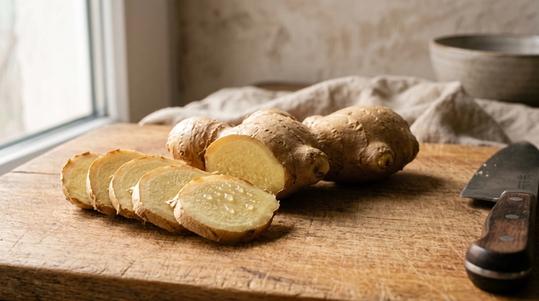
The reasoning becomes clear once you know what fresh ginger does. In Chinese medicine ginger — shēng jiāng 生薑 — is acrid and warm, and it disperses cold and warms the middle. Cold here is not a description of the weather. It names a pattern: pain that grips and cramps, that eases when you put a hot water bottle against it, that is worse for cold and better for warmth, often with dark blood and clots. Cold settling in the lower abdomen congeals and obstructs, and it is the obstruction that hurts. Ginger warms and moves.
The sugar is not there to make the tea palatable. Raw brown sugar — hóng táng 紅糖 — is warm and sweet, and in Chinese dietary practice it warms the middle and moves the blood. It is the same reasoning that puts ginger and brown sugar water at the center of Chinese postpartum care.
Drink it hot, starting a day or two before you expect to bleed and continuing through the first days. Making it once, after the pain has already taken hold, does less than drinking it across those days.
It will not suit everyone. If your period pain runs hot — burning rather than gripping, worse for a hot bath, with restlessness or irritability alongside it — then warming is the wrong direction and ginger may make it worse. Worth knowing before you commit to a week of it.
And if your periods are severely painful, if the pain has been getting worse year on year, if it comes with pain on intercourse or with your bowels, or if it takes days out of your month, come and be looked at properly. Severe period pain is common, but it is not simply something to be endured, and it often has a specific cause with a name.