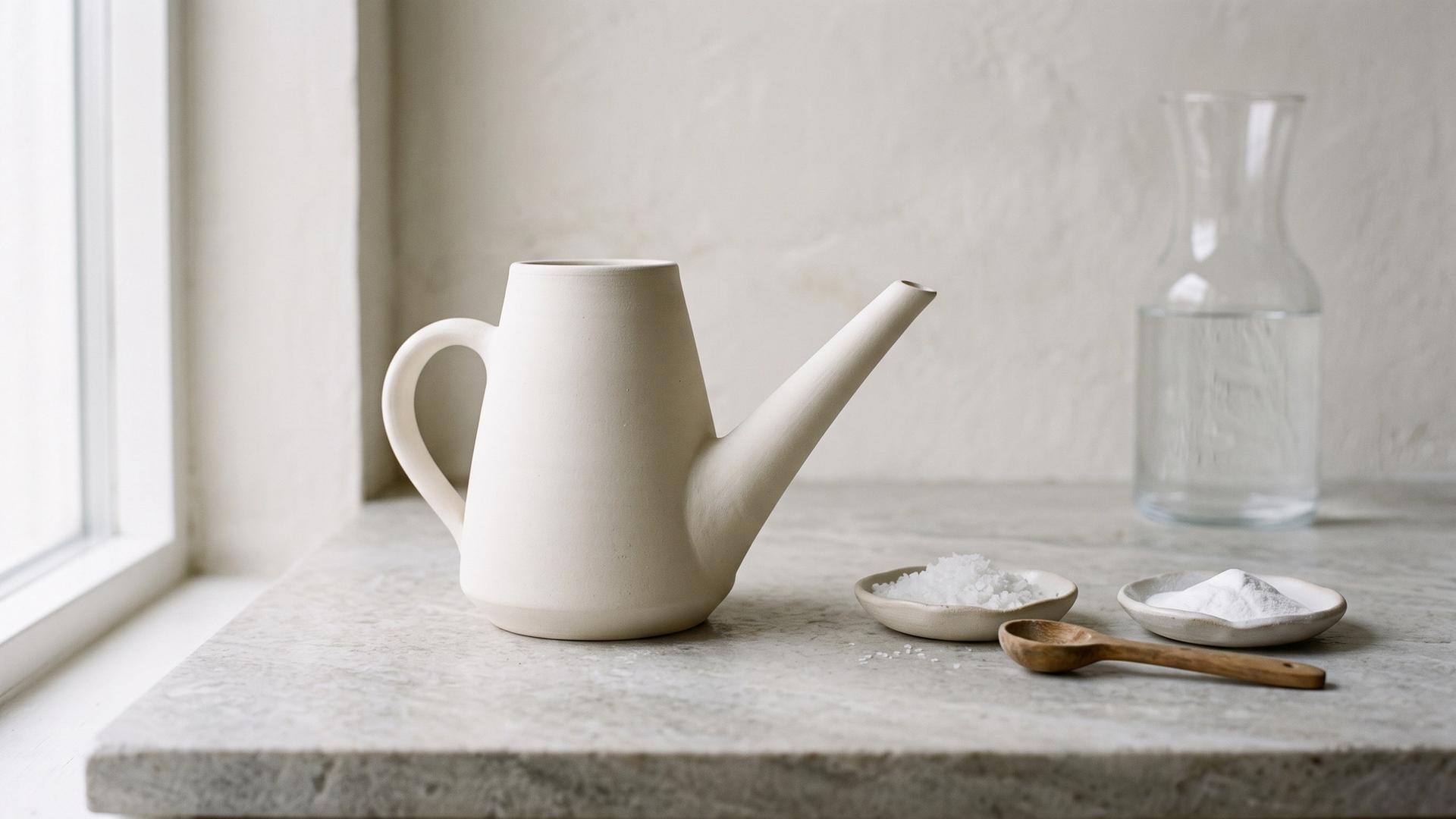
Neti Pot for the Sinuses
For congestion, allergies and heading off a cold.
Season Year-round
Read the section on water before you do this. It matters more than anything else on the page. You will need:
- A neti pot
- Sea salt or kosher salt
- Baking soda
- Safe water — see below
Mix a quarter to a half teaspoon of salt with a quarter teaspoon of baking soda in the pot, add lukewarm water, and stir until dissolved. Rinse each nostril three to five times. If it is your first time, let the water run straight back and spit it out of your mouth rather than trying to steer it. If it burns, use less salt. The baking soda buffers the solution so that it is gentler on the lining of the nose.
Do not use it while you are acutely unwell.
ON THE WATER. Never use water straight from the tap. Tap water is treated to be safe to swallow, and stomach acid deals with what survives; the nose has no such defence, and organisms that are harmless to drink can cause serious infection when they are introduced into the nasal passages. The specific danger is an amoeba called Naegleria fowleri, which causes a brain infection that is rare and almost always fatal. There was a documented death in Texas in 2024 from nasal rinsing with unsafe water.
The FDA gives three safe options: water labeled distilled or sterile; tap water boiled for three to five minutes and cooled to lukewarm, which keeps for twenty-four hours in a clean closed container; or water passed through a filter rated to an absolute pore size of one micron or smaller — good reverse osmosis system will meet these specifications. Wash your hands, make sure the pot is clean and dry before you start, and rinse and dry it afterwards. Do not share a pot.
Saline rinsing is effective for managing chronic sinus disease and allergic rhinitis, and is widely recommended as a low-risk first measure. It is Ayurvedic in origin — jala neti, described in the yogic literature centuries before it reached Western medicine in the 1890s.