Walnut and Black Sesame Porridge Topper
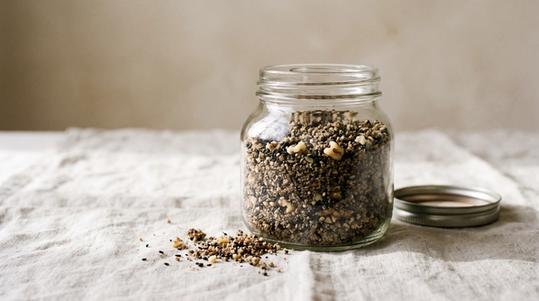
A jar of ground walnuts and black sesame for the top of your porridge.
Season Winter
Ingredients
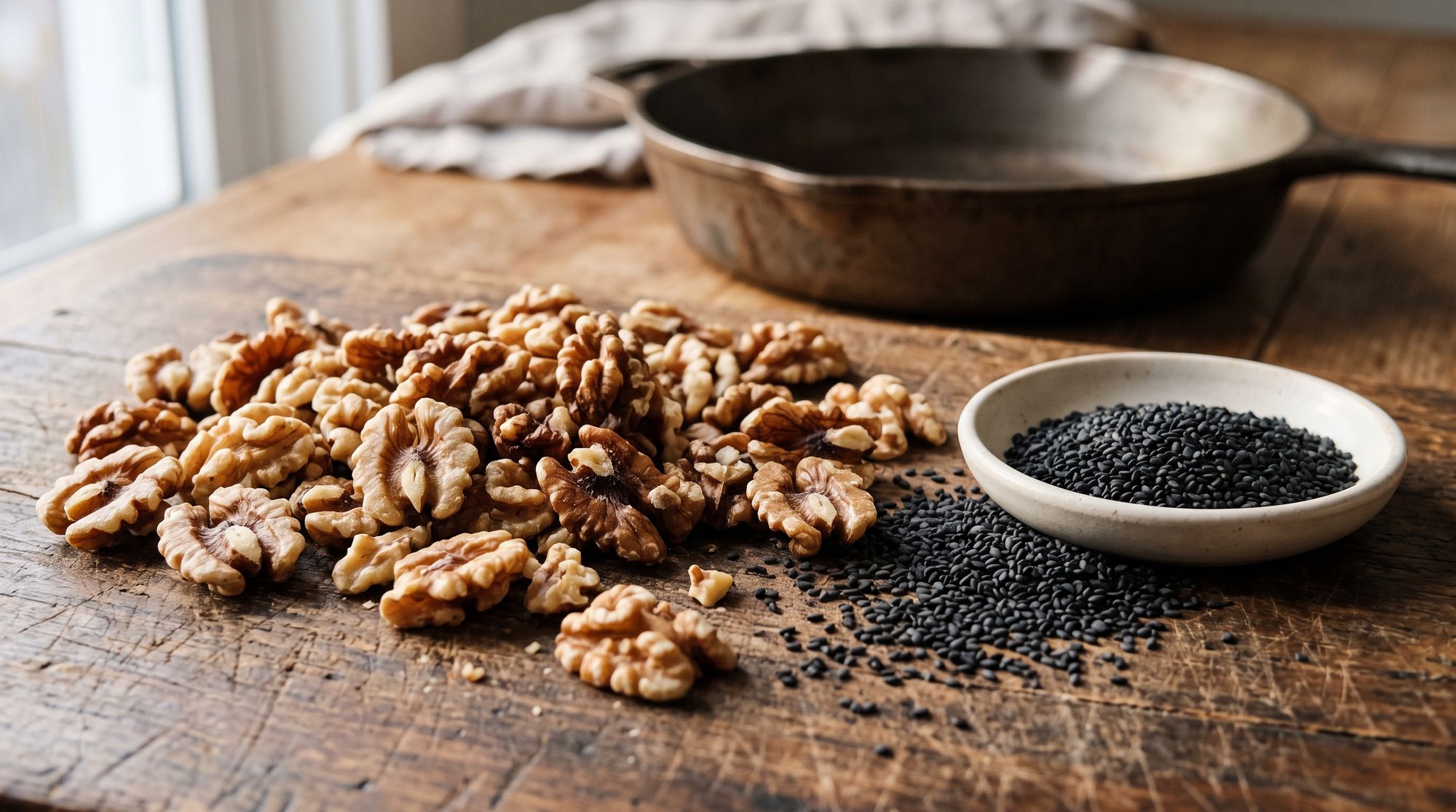
- 2 cups toasted walnuts
- ¼ cup toasted whole black sesame seeds
Method
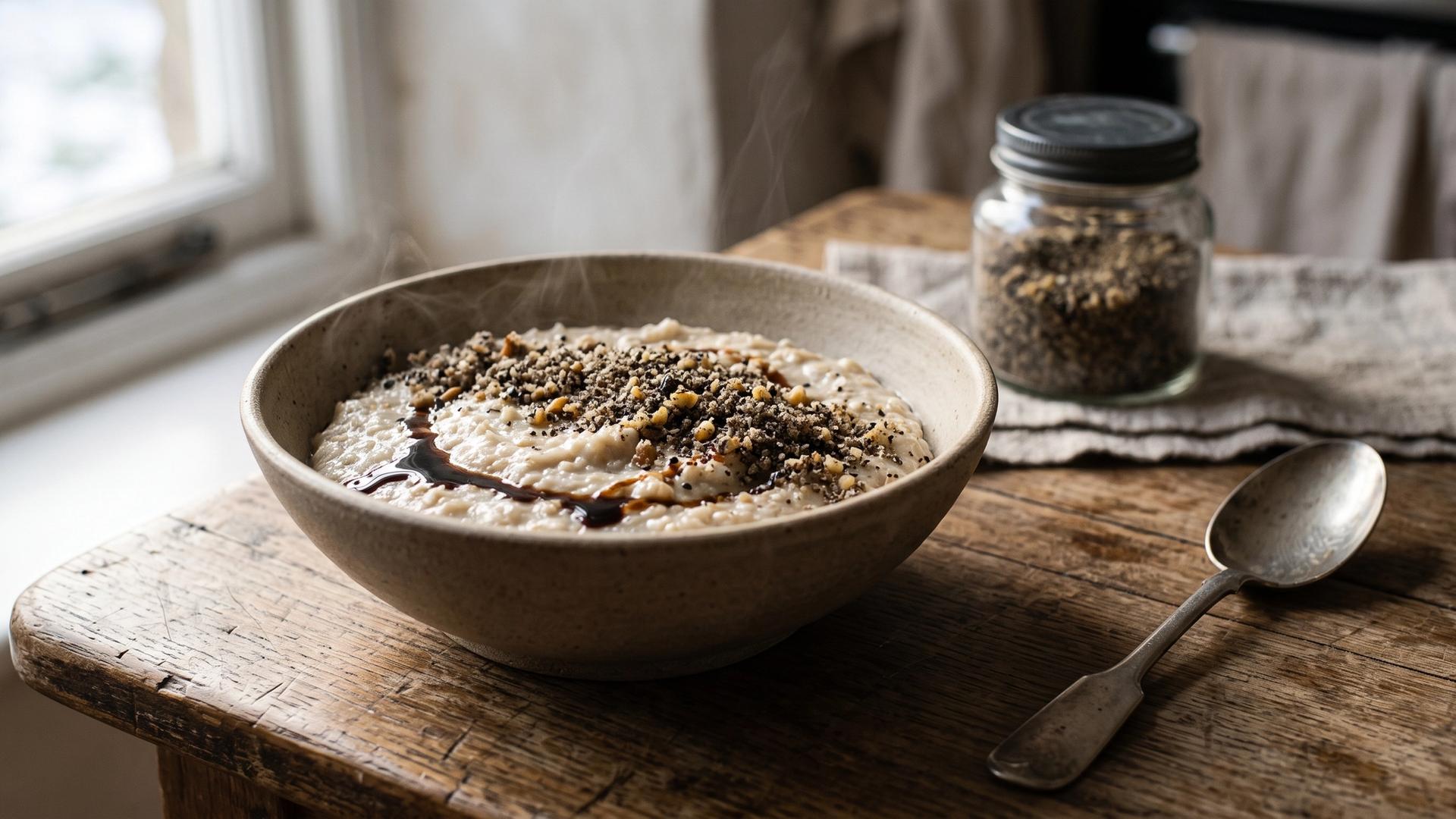
Toast the sesame seeds in a dry sauté pan until they start to pop, watching them so they do not burn. Grind both together and keep in an airtight glass jar in the fridge. Spoon over hot cereal, or stir into hot water with honey or blackstrap molasses for a tea.
These are the two wintertime foods of Chinese dietary therapy, and both correspond to the Kidney — the organ associated with winter, with the Water phase, and with the deep reserves the season is supposed to be spent conserving. Walnuts — hú táo rén 胡桃仁 — are sweet and warm, tonify the Kidney, strengthen the lower back and knees, and moisten the intestines. Black sesame is black, which is the color of winter and of the Water phase, and it nourishes blood and essence.
You may have heard that walnuts are good for the brain because they look like one. That is a memorable folk association rather than the classical reasoning, which rests on the properties above — though the Kidney is held to generate marrow, and the brain is described as the sea of marrow, so the two ideas have grown into each other over time.
Nutritionally they hold up. A one-ounce serving of walnuts carries about 2.5 g of alpha-linolenic acid, which makes them the only tree nut that is a serious source of plant omega-3, along with vitamin E, magnesium and a good deal of polyphenol. Whole black sesame is one of the better non-dairy sources of calcium there is.